
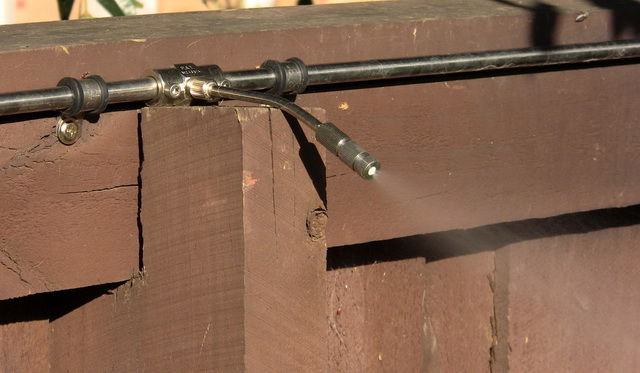
A high-pressure misting system is low maintenance, but it isn't no maintenance. A few simple jobs each year keep the nozzles spraying a fine, even mist and keep the pump running at full pressure. Most of them take minutes.
This guide covers what to do, when to do it, and how to work out what's wrong if your system starts dripping or loses pressure.
A Simple Maintenance Schedule
| When | What to do |
|---|---|
| Start of each summer | Fit fresh filter cartridges, check the pump oil, then run the system and check every nozzle |
| Through the season | Watch for drips, uneven spray or a drop in pressure |
| Every 6 to 12 months | Replace the filter cartridges |
| Once a year | Check the pump and pressure settings |
| Every 800 to 1,200 hours of use | Pump maintenance (many of our pumps have a built-in reminder) |
| As needed | Clean or replace nozzles that show mineral build-up |
| Flushing the system | At the start and end of summer, flush the system when no one is around, so no stale water is left in the pipes. |
If your water is hard, or the system runs every day through summer, lean towards the shorter end of each interval.
How to Clean Misting Nozzles
Nozzles are the part most likely to need attention. Our high-pressure nozzles have a very fine opening, and each one has its own small stainless steel filter inside. Over time, minerals in the water can build up on the opening and on that filter, especially in hard water areas.
To clean a nozzle:
- Switch off the pump.
- Unscrew the nozzle from the line.
- Soak it in white vinegar for a few hours to dissolve the mineral build-up.
- Rinse it well in clean water.
- Screw it back in and run the system to check the spray.
Never poke the opening with a pin or wire. The orifice is precision made, and even a small scratch can distort the spray. If a nozzle still drips or sprays unevenly after cleaning, replace it.
Signs a Nozzle Needs Attention
A healthy nozzle produces a fine, even cone of mist that disappears into the air. Look out for:
- Spitting or uneven spray. Usually a partial blockage.
- Larger droplets or wet spots. The nozzle may be partly blocked or worn.
- Dripping after the pump stops. If an anti-drip nozzle keeps dripping it may have debris in the seal or a worn seal.
- No mist at all. A full blockage, or a problem further back in the system.
Why Has My Misting System Lost Pressure?
A drop in pressure shows up as weaker mist, bigger droplets or nozzles at the end of the line that barely spray. Work through these checks in order:
- Water supply. Make sure the tap is fully open and the supply hose isn't kinked.
- Filter cartridges. A clogged filter restricts the water reaching the pump. If it's been more than 6 to 12 months, replace the cartridges.
- Blocked nozzles. Several partly blocked nozzles can change how the whole line performs. Check and clean them.
- Leaks. Look along the line and at each fitting for water escaping. A leak lets pressure out before it reaches the nozzles.
- Too many nozzles. If nozzles have been added since the system was installed, the pump may now be running more than it's rated for.
- The pump. If the pump is due for maintenance, or the checks above don't fix it, it's time for a service.
If you've worked through the list and the pressure is still low, get in touch and we'll help you track it down.
Looking After the Pump
The pump is the heart of the system, and it's the part that builds the pressure the nozzles need.
Check the oil
Our pump kits come with everything you need. Check the oil level when you install the system and again at the start of each season, following the pump instructions.
Follow the maintenance interval
Our pumps are due for maintenance at around 800 to 1,200 hours of use, depending on the model. The EasyMist range is due at 1,000 hours, and the MistPro range has a built-in maintenance reminder between 800 and 1,200 hours, so you don't have to keep count.
Keep it out of the weather
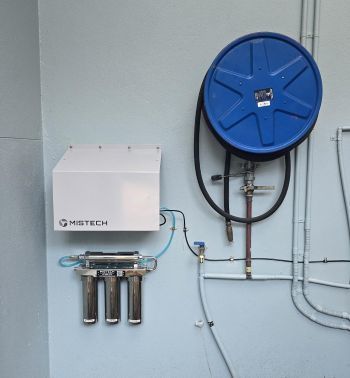
A wall-mounted pump cover raises the pump off the ground and helps shield it from rain, sun and debris. It also makes the pump easier to reach when it's time for a service.
A yearly check
Once a year, check the pump and pressure settings.
Don't Forget the Filter
Filtration is the best way to cut down on nozzle maintenance. A good filter removes sediment and helps reduce the scale that blocks nozzles. Replace the cartridges every 6 to 12 months, and if you're on tank, bore or hard water, check them more often. Our guide to water quality covers how each filter stage works. We can supply replacement cartridges, and you'll find filters and pumps in our online shop.
How Long Do Misting Nozzles Last?
There's no fixed lifespan. It depends mostly on your water quality, how well it's filtered and how often the system runs. A nozzle on a well-filtered system will last much longer than one running on unfiltered hard water. Replace any nozzle that still drips or sprays unevenly after cleaning.
Replacement Parts and Upgrades
We supply everything you need to keep a system running:
- Replacement nozzles in stainless steel or chrome-plated brass, sold individually or in 50-packs
- Replacement filter cartridges
- Misting line, fittings and other spare parts
- Line upgrades if you want to extend or change your setup
Browse parts in our shop, or see our installation advice page if you're planning to extend your system.
Frequently Asked Questions
How do you clean misting nozzles?
Switch off the pump, unscrew the nozzle, soak it in white vinegar for a few hours to dissolve mineral build-up, then rinse it and screw it back in. Don't poke the opening with a pin or wire, as it can damage the spray. Replace any nozzle that still sprays unevenly after cleaning.
How often should a misting system be serviced?
Check the pump and pressure settings once a year, replace filter cartridges every 6 to 12 months and service the pump at around 800 to 1,200 hours of use. Check the nozzles at the start of each summer.
Why has my misting system lost pressure?
The most common causes are a clogged filter, blocked nozzles, a leak in the line or fittings, a restricted water supply or a pump that's due for maintenance. Work through each one in turn.
How long do misting nozzles last?
It depends on your water quality, filtration and how often the system runs. Good filtration and regular cleaning extend their life. Replace any nozzle that drips or sprays unevenly after cleaning.
Need replacement parts or advice? Contact us or call 07 4946 4702.