
Livestock Cooling for Cattle, Poultry and HorsesCooling solutions for cattle, poultry and horses during hot weather.Hot weather can be hard on animals, especially in yards and sheds where air movement is limited. Shade and fresh drinking water are essential, but some areas may need additional cooling to help animals cope. Mistech Cooling helps farms plan misting and fan systems around the animals, the space and the way it's used. A dairy holding yard, an open feedlot and an enclosed poultry shed all have different needs. We'll look at where heat is building up, how air moves through the area and what type of cooling makes sense for your site. |
|
Cattle Cooling for Dairy Farms and Feedlots
Cattle can struggle in hot weather, particularly when it's humid or the temperature stays high overnight. Heat stress in cattle can affect their appetite and wellbeing. In dairy herds, it can also reduce milk production.
The first steps are always reliable access to clean water, shade and regular checks throughout the day. Fans, misting and sprinklers can provide additional cooling in the places where cattle spend the most time.
Dairy Yards and Holding AreasCows can become hot while waiting to be milked, particularly when they're standing close together in a holding yard. Shade helps, and a cooling system can make the wait more comfortable. Sprinklers are often used in dairy yards to wet the cows directly. Fans help move air across the herd, while misting may be an option for cooling the air in an open or well-ventilated area. The right choice depends on the yard's layout, airflow, drainage and water supply. | Feedlots and Open Cattle AreasIn a feedlot, cattle may be exposed to heat for much longer. Cooling needs to be planned alongside shade, drinking water and the areas where cattle gather to feed or rest. Fans and misting may be useful in suitable covered areas, but they are only one part of managing heat. Staff should also watch for changes in behaviour, such as cattle eating less, becoming restless or gathering around water troughs. | Enclosed Cattle ShedsEnclosed sheds need a different approach because mist adds moisture to the air. Without enough ventilation, humidity can build up and make it harder for cattle to cool down. Before installing misting, it's important to look at how fresh air enters the shed and how warm, humid air leaves it. Fan placement and misting controls should work with the shed's ventilation, with conditions monitored while the system is running. |
How to Recognise Heat Stress in Cattle
Signs of heat stress in cattle can include:
- Faster breathing or panting
- Drinking more than usual
- Eating less
- Seeking shade
- Spending more time standing
- Drooling
- Appearing unusually tired
Check cattle regularly during hot weather rather than waiting for obvious distress. If an animal appears heat affected, move it into shade where safe, make sure it has access to clean water and follow your farm's heat-stress plan.
Contact a vet if it is distressed or does not improve.
When Should You Turn Cattle Cooling On?
Air temperature alone doesn't tell the whole story. The temperature–humidity index (THI) looks at temperature and humidity together to help indicate when cattle may be at risk of heat stress.
For dairy cows, a THI of around 68 is commonly used as an early warning point. It's a useful prompt to check your herd and put cooling measures in place before cows show clear signs of stress. The right time to turn a system on will also depend on the conditions at your farm, how long the heat is expected to last and how the cattle are behaving.
Fans and Mist or Sprinklers: What's the Difference?
Fans, misting and sprinklers can all help with cattle cooling, but they work in different ways.
A misting system releases fine droplets designed to evaporate in the air. Fans help move that air through the area being cooled. Sprinklers use larger droplets to wet the cows directly; airflow then helps the water evaporate from their coats.
Sprinklers may be a good fit for a dairy holding yard where the aim is to cool the cows directly. Fans and mist may suit an open or well-ventilated area where the aim is to cool the surrounding air. Neither is a one-size-fits-all answer: humidity, drainage and where the water will land all matter.
How Much Water Will the System Use?
That depends on the pump, number of nozzles, their flow rate and how long the system runs. Because farms vary so much, a single water-use figure wouldn't give you a useful estimate.
When planning a system, Mistech Cooling can help work out its expected water use and how it should be controlled. See how a high pressure misting system works, or talk to us about the water supply available at your site.
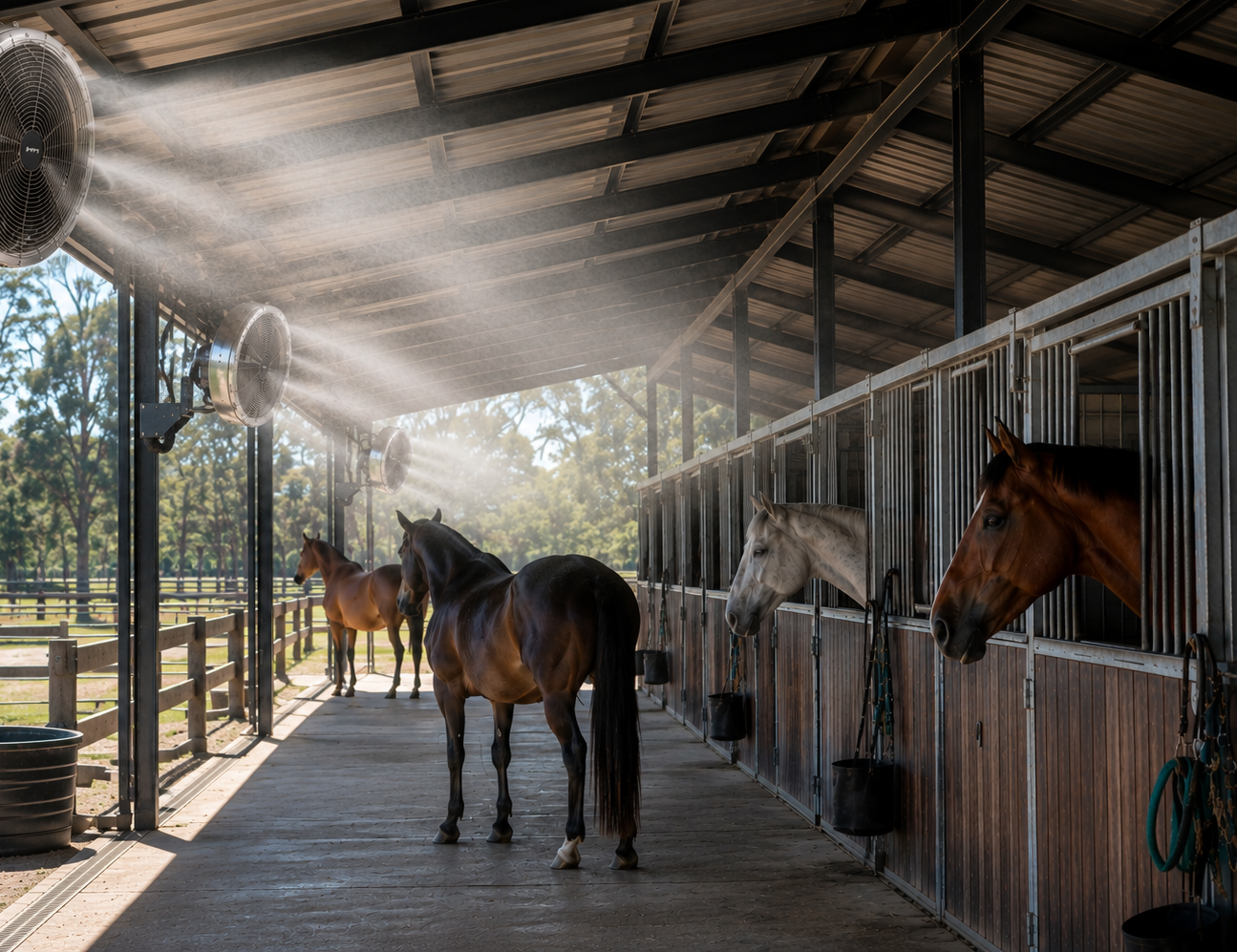
Poultry Shed CoolingPoultry sheds need careful management during hot weather. Birds may begin panting as they try to cool down, and high humidity can make that harder. Fresh drinking water and good ventilation are essential. Misting or fogging can help in some sheds, but the added moisture needs somewhere to go. If ventilation cannot carry humid air out, misting may make conditions worse rather than better. A poultry shed cooling system should therefore be planned around the ventilation already in place. Shed size, bird numbers, airflow and conditions at bird level all need to be considered. The aim is to manage heat without leaving litter damp or allowing humidity to build up. | Horse Stable MistingA stable can become hot and still during summer, especially if airflow is poor. Horses need shade, clean drinking water and a space that lets heat escape. In a suitable open or well-ventilated stable, a misting fan may provide extra cooling. With horse stable misting, placement makes a difference. Airflow should reach the horse, while the mist should be positioned so it doesn't leave bedding or feed damp. Covered wash bays and other open equine areas may also be suitable. Mistech can help you decide whether a fixed installation or an outdoor misting fan is a better fit for your space. |
Planning the Right Livestock Cooling Setup
The best place to start with livestock cooling is the area that gets hottest. Tell us where the animals spend their time, what shade and ventilation you already have, and when cooling is most needed.
Photos and rough dimensions are helpful too. From there, we can look at fan positions, nozzle placement, water supply and the size of the pump required. A misting kit may suit a smaller area, while a larger yard or shed may need a system planned around its layout.
If you're also cooling work areas on your property, explore our industrial misting fan options.
Talk to Us About Your Farm
Tell us about your animals and the space you want to cool. We can help you work through the options and plan a setup that suits your site.
Book a Call →
Livestock Cooling FAQs
What's the best way to cool cows in hot weather?
Make sure they have shade, plenty of clean water and regular checks throughout the day. Fans, sprinklers or misting may provide extra cooling, depending on whether the cattle are in a dairy yard, feedlot or shed. Sometimes a combination of the three works best.
What THI is too high for dairy cows?
A THI of around 68 is commonly used as an early warning point for dairy cow heat stress. Use it alongside what you can see in your herd and the conditions forecast for your farm.
Can misting make a shed too humid?
Yes. In an enclosed shed, misting needs to work with the ventilation system so humid air can leave. Airflow and humidity should be checked when deciding whether misting is suitable.
Do misting systems use less water than sprinklers?
It depends on the equipment and how long it runs. The two systems also do different jobs: mist is designed to cool the air, while sprinklers wet animals directly. Ask for a water-use estimate for the setup proposed for your farm.
Can one cooling system be used for cattle, poultry and horses?
The equipment may be similar, but the layout should be planned for the animals and space. Ventilation, humidity and the need to keep feed or bedding dry will affect how the system is installed.