
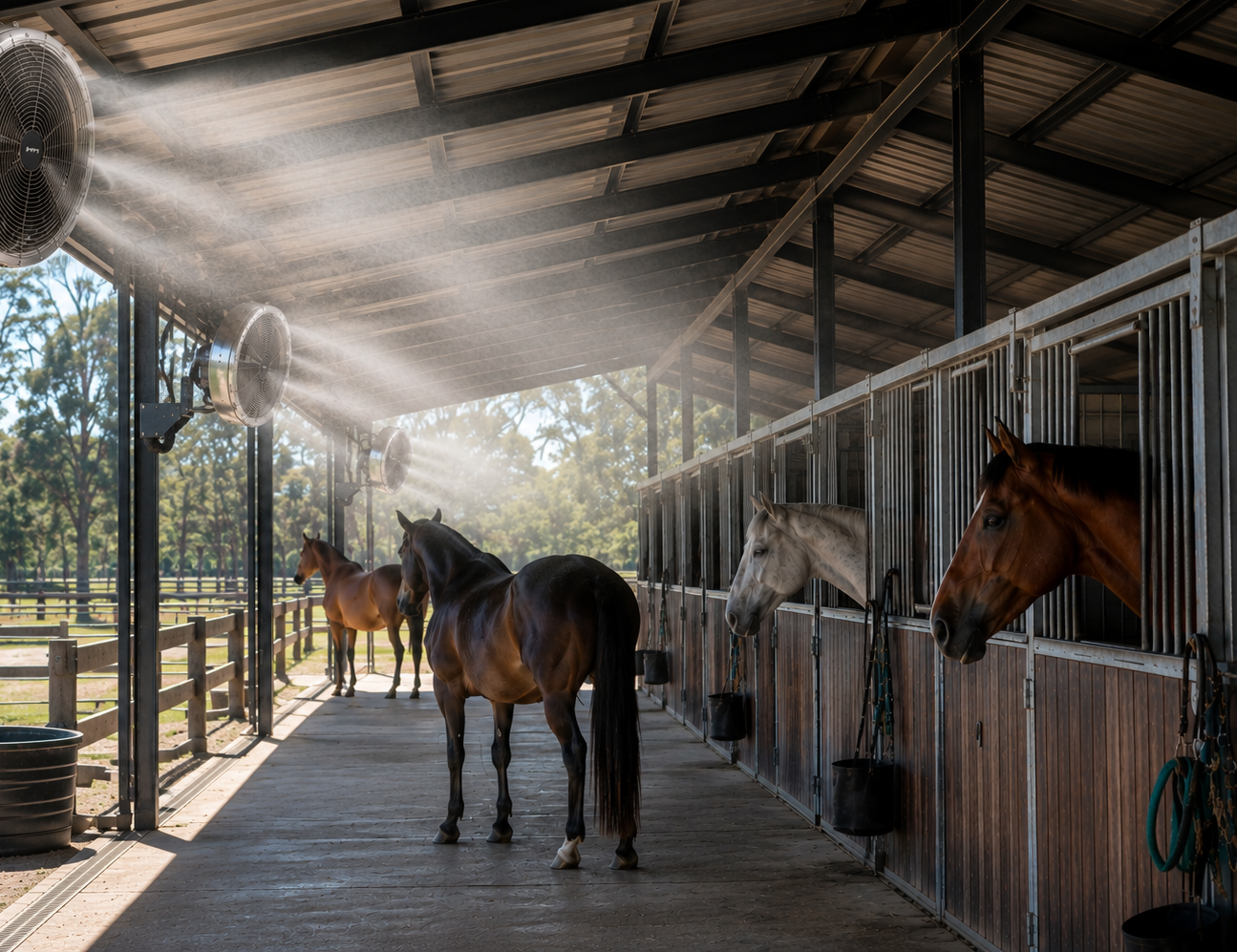
Australian summers are hard on animals. Heat stress cuts feed intake, slows growth and production, and in severe heatwaves it can lead to stock losses. A high-pressure misting system is one of the most practical ways to bring the temperature down in sheds, stables and holding yards, without soaking the animals, their feed or their bedding.
We've supplied misting for a large commercial chicken farm and for horse stables, we've had enquiries from dairies, and we've supplied systems for large greenhouses. Here's how misting works on a farm, where it helps most, and what to plan for.
Why Heat Stress Matters on a Farm
Animals feel heat differently to us, and many have limited ways to shed it. When temperatures climb, they eat less, produce less and become more vulnerable to illness. For a farm, that shows up directly in the numbers: lower milk yields, slower weight gain, fewer eggs and higher losses.
Cooling isn't only about comfort. It's about protecting animal welfare and keeping production steady through the hottest weeks of the year.
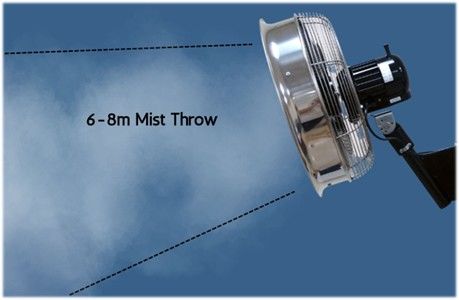
How Misting Cools Livestock Spaces
A high-pressure pump forces filtered water through fine nozzles at around 1,000 psi, creating droplets as small as 8 to 10 microns. Those droplets flash evaporate, absorbing heat from the air as they go. The result is a cooler space, without the drenching you'd get from sprinklers or hoses.
Adding airflow makes a big difference. Misting fans move the cooled air across the animals and help the mist evaporate faster, which matters in sheds and on humid days.
Where Misting Helps Most
Poultry sheds
Poultry don't sweat. They cool themselves mostly by panting, and as temperatures rise they eat less and production drops. In a shed full of birds, heat builds quickly.
High-pressure misting lowers the air temperature in the shed while keeping the litter dry, which is the balance a poultry operation needs. Getting that balance right depends on matching the misting to the shed's ventilation, so the mist evaporates rather than settling. On the poultry work we've done, the design has to start with how air moves through the shed.
Dairies
Australian dairy industry guidance points out that heat stress reduces feed intake, milk yield and fertility, and increases the risk of disease. The recommended responses include shade, plenty of clean water, and cooling in holding yards and milking sheds, with misting systems listed among the longer-term investments.
Holding yards are a natural fit for misting. Cows can stand bunched together in the sun waiting to be milked, and a misting line or misting fans over the yard brings the temperature down while they wait.
Stables and equine facilities
Misting fans can be positioned in suitable stables and covered areas to give horses airflow and mist cooling during hot weather. Because the mist is so fine, it cools the space without wetting the horses or their bedding.
Feedlots, yards and sheds
Covered yards, loading areas and machinery sheds can all be fitted with misting lines or fans. Misting can also help keep dust down in these areas, as fine droplets capture airborne particles and help them settle.
Greenhouses and horticulture
Misting does double duty in a greenhouse. It cools the air and raises humidity, which many plants benefit from, and it can help reduce plant stress in hot conditions. We've supplied systems for large greenhouses, where the layout of the lines and the timing of the misting cycles are matched to the crop.
Do Misting Systems Work in Sheds and Barns?
Yes, as long as the shed has enough air movement. Evaporative cooling adds moisture to the air. In an open-sided shed or a well-ventilated barn, that moisture moves away and the cooling keeps working. In a closed shed with poor ventilation, humidity can build up and the cooling effect drops.
That's why most livestock installs pair misting with fans, and why we look at a shed's ventilation before recommending a layout.
What to Plan for on a Farm Install
Water quality
Many farms run on bore or tank water. Bore water can be high in minerals, and tank water can carry sediment. Both will block misting nozzles without good filtration. Plan for filtration from day one, especially on long runs with many nozzles.
Durability
Farm conditions are tough on equipment: dust, animals, washdowns and weather. Our industrial misting fans are stainless steel, corrosion resistant and IP54 rated for outdoor use.
Pump size and zones
Large sheds and multiple yards need a pump with the capacity to match. Our commercial MistPro pumps can support up to 200 nozzles (0.15mm), depending on the model, and app control lets you schedule misting for the hottest parts of the day.
Timing
Misting works best on cycles rather than running constantly, especially in enclosed spaces. Timed cycles keep the space cool while giving the mist time to evaporate.
Getting Started
Every farm is different, so the right system depends on the animals, the size and layout of your sheds and yards, your water supply and your climate. Our industrial misting fans page covers the heavy-duty fan options, our installation advice page shows how systems can be mounted on different structures, and you can browse pumps, filters and parts in our online shop.
Frequently Asked Questions
How do you cool livestock in summer?
Start with shade, plenty of clean water and good ventilation. On top of that, high-pressure misting systems and misting fans lower the air temperature in sheds, yards and stables without soaking the animals or their feed.
What reduces heat stress in dairy cattle?
Shade, clean water, feeding during cooler parts of the day, and cooling in holding yards and milking sheds. Misting systems and fans are among the infrastructure options for keeping cows cool while they wait to be milked.
Do misting systems work in sheds and barns?
Yes, when there's enough airflow for the mist to evaporate. Pairing misting with fans and making sure the shed is well ventilated gives the best results.
How do poultry sheds stay cool?
Through ventilation, airflow and evaporative cooling. Because poultry don't sweat and rely on panting, keeping the shed air cool is essential. High-pressure misting matched to the shed's ventilation lowers the temperature while keeping the litter dry.
Want to talk about cooling for your farm? Contact us or call 07 4946 4702.